City Guide

Nevsehir Travel Guide

Türkiye

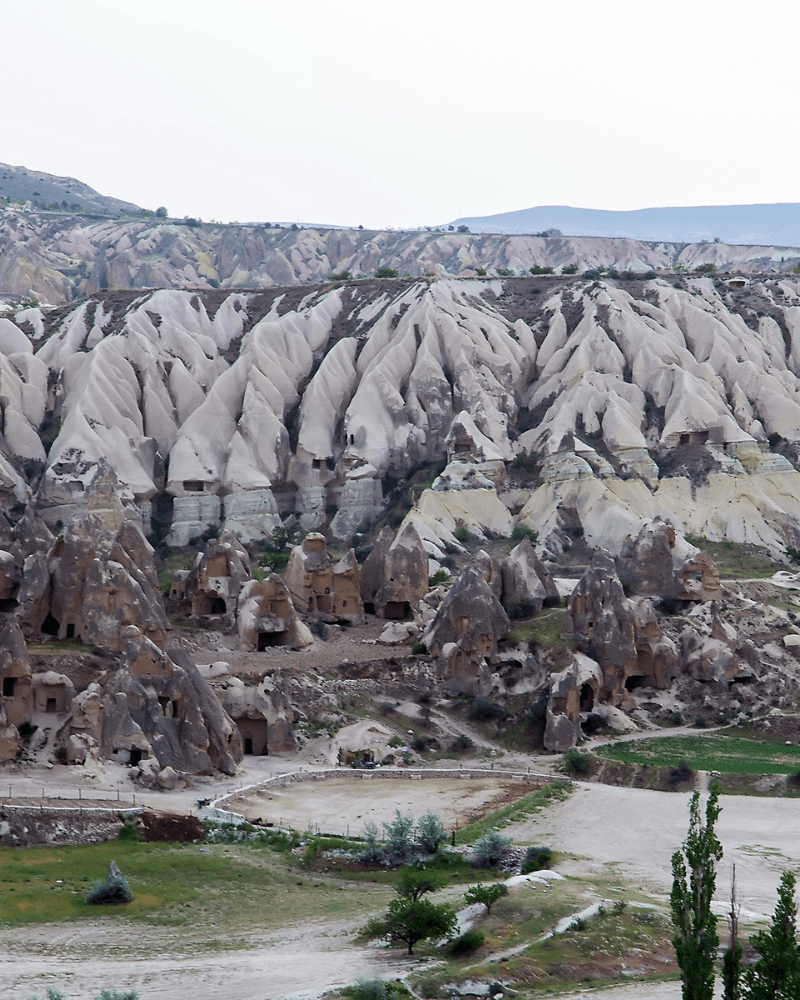
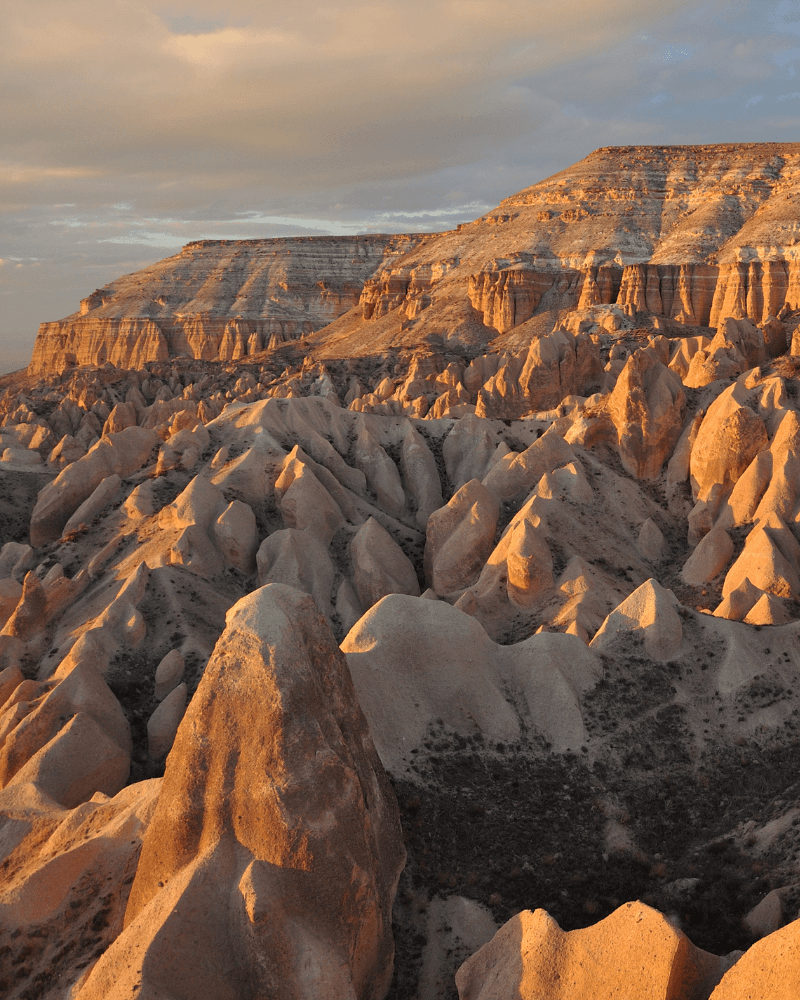
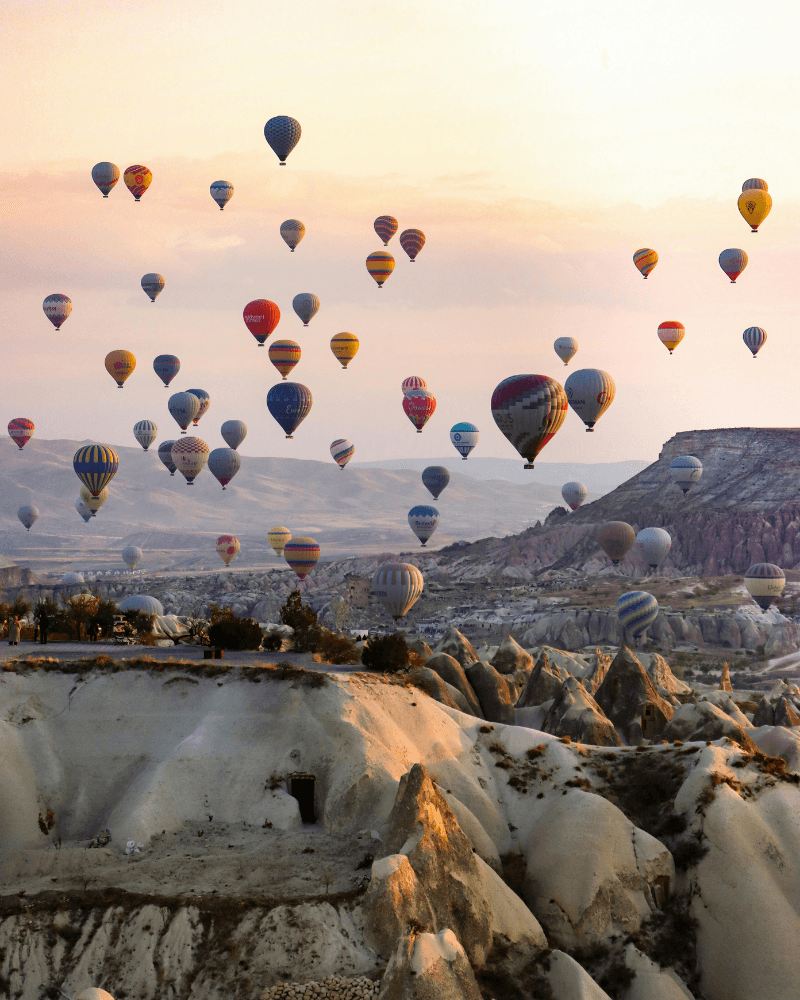
At the heart of Cappadocia, Nevsehir is known for one of the world's most extraordinary cultural landscapes, shaped by fairy chimneys, rock-cut churches, underground cities and dramatic valleys. Historic settlements such as Goreme, Uchisar and Avanos offer memorable experiences ranging from hiking and sunrise views to iconic hot-air balloon flights.

Nevsehir, Türkiye city travel guide

Must-See Places in Nevsehir

Discover the landmarks, historic sites, natural highlights, and memorable places worth seeing in Nevsehir.

Göreme Open-Air Museum place to visit

Museum

Göreme Open-Air Museum

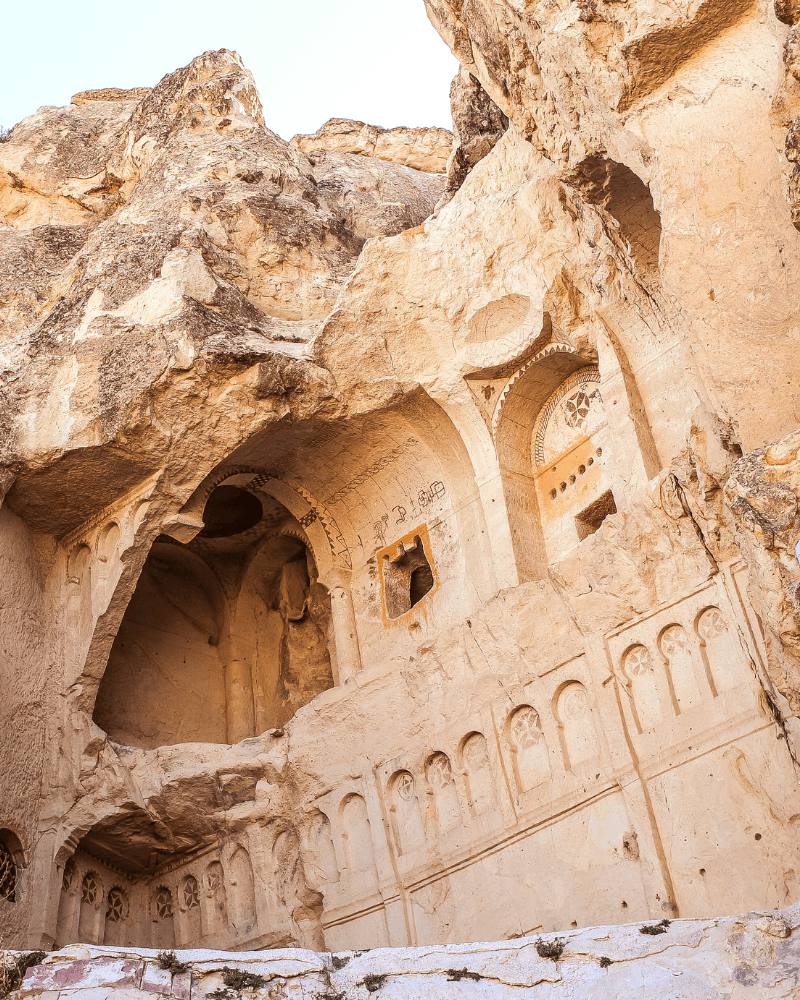
One of Cappadocia’s most significant historical and cultural sites, Göreme Open-Air Museum reflects the region’s early Christian and Byzantine heritage through its rock-cut churches, chapels, monastic spaces, and remarkable frescoes. The area was an important centre of monastic life from the 4th to the 13th centuries and includes notable structures such as the Dark Church, Apple Church, Snake Church, and Sandal Church. Göreme Valley forms an important part of the Göreme National Park and the Rock Sites of Cappadocia, a UNESCO World Heritage Site.

  • Ticketed
  • Architecture
  • Religious Site
Uçhisar Castle place to visit

Castle

Uçhisar Castle

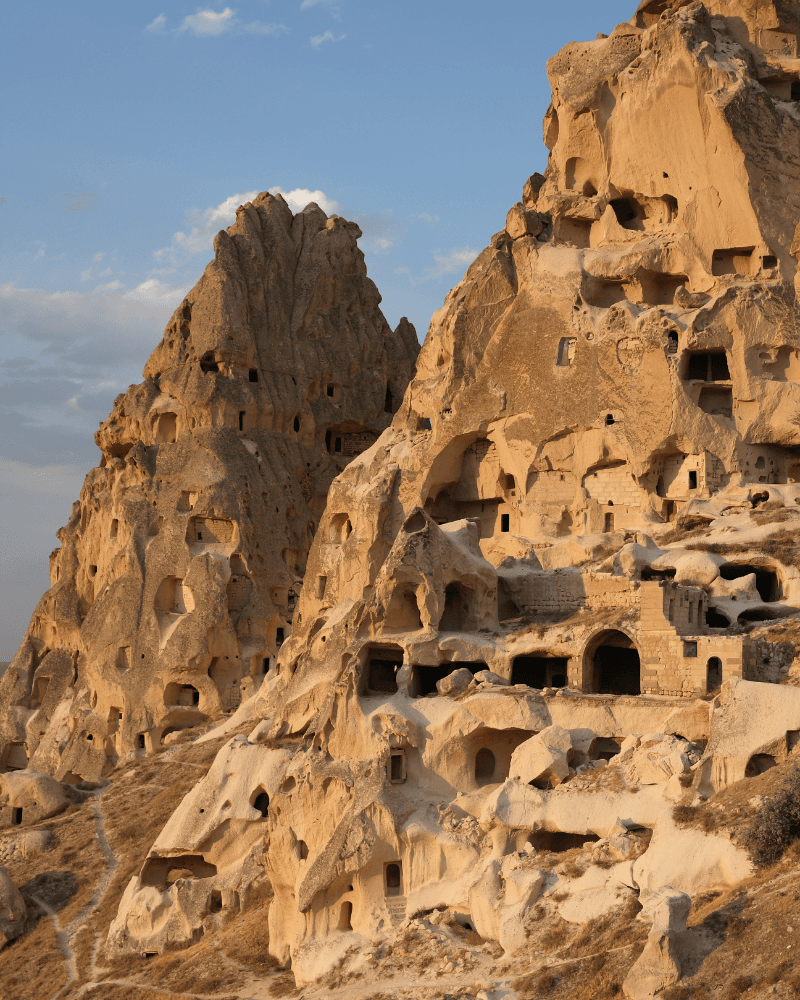
One of Cappadocia’s highest and most impressive viewpoints, Uçhisar Castle was formed by carving a massive natural rock formation over centuries for living, storage, shelter, and defensive purposes. Used since the Roman and Byzantine periods, it also remained an important defensive point during the Seljuk era. From its summit, visitors can enjoy sweeping views over Göreme, Pigeon Valley, the surrounding valleys, and, on clear days, Mount Erciyes and Mount Hasan. Famous especially for its sunset views, Uçhisar Castle is one of Cappadocia’s most striking examples of the relationship between the region’s natural formations and rock-cut architecture.

  • Ticketed
  • Architecture
  • Photo Spot
Paşabağları and Zelve Open-Air Museum place to visit

Historical District

Paşabağları and Zelve Open-Air Museum

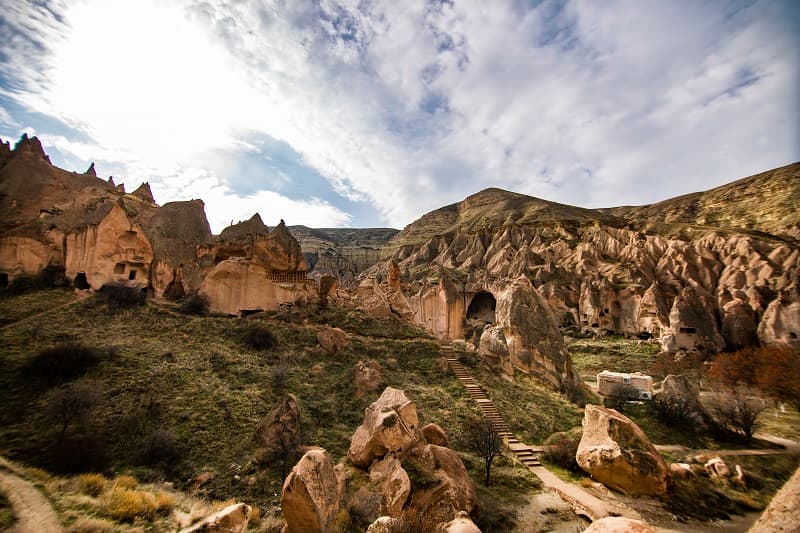
Paşabağları and Zelve Open-Air Museum bring together some of Cappadocia’s most distinctive fairy chimneys with living and religious spaces carved into the rock over centuries. Once known as the “Valley of the Monks,” Paşabağları is especially known for its multi-stemmed fairy chimneys and a chapel dedicated to Saint Simeon. Zelve, spread across three valleys, became an important Christian settlement and religious centre between the 9th and 13th centuries and contains churches, monasteries, rock-cut dwellings, tunnels, dovecotes, a mill, and a mosque. Inhabited until 1952, Zelve is one of the best places in Cappadocia to experience the close relationship between the region’s extraordinary landscape and its rock-cut way of life.

  • Ticketed
  • Architecture
  • Photo Spot
Dark Church place to visit

Church

Dark Church

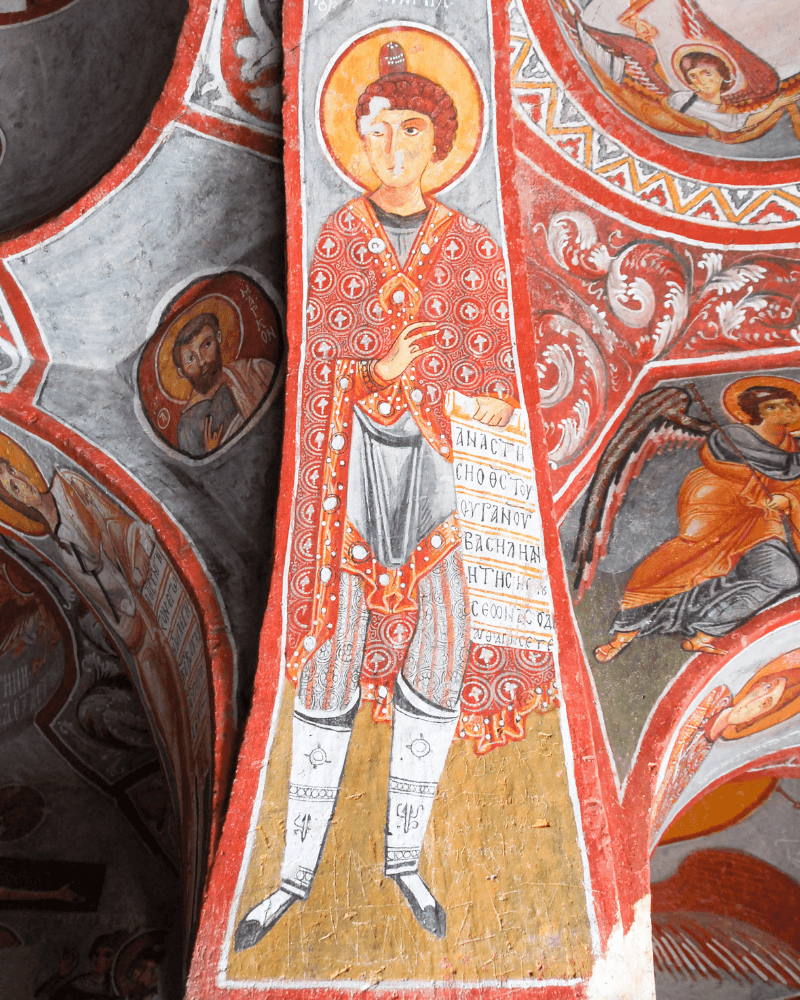
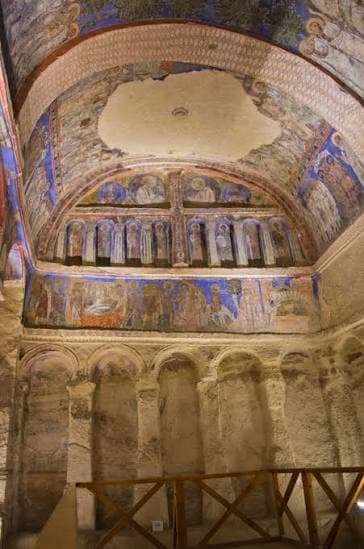
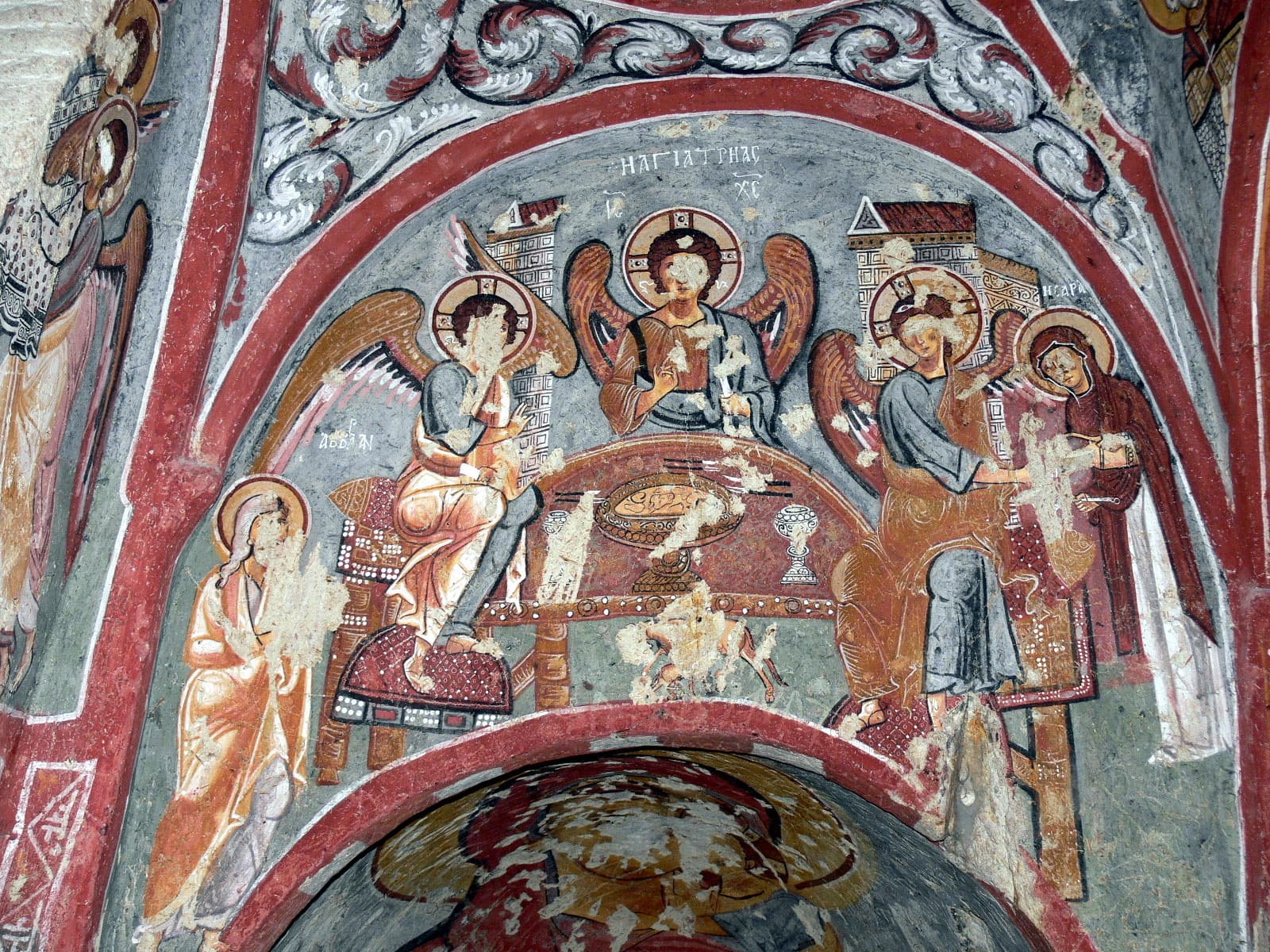
One of the most remarkable rock-cut churches within Göreme Open-Air Museum, the Dark Church dates to the late 11th and early 12th centuries. It takes its name from the very limited natural light entering through a small window in the narthex. This lack of light helped preserve the exceptionally vivid colours of the frescoes covering its walls and vaults. Its paintings depict scenes from the Bible and the life of Christ, including the Nativity, Last Supper, Crucifixion, and Ascension. With some of Cappadocia’s best-preserved Byzantine frescoes, it is one of the region’s most significant places for experiencing rock-cut religious art.

  • Ticketed
  • Architecture
  • Religious Site
Derinkuyu Underground City place to visit

Historical District

Derinkuyu Underground City

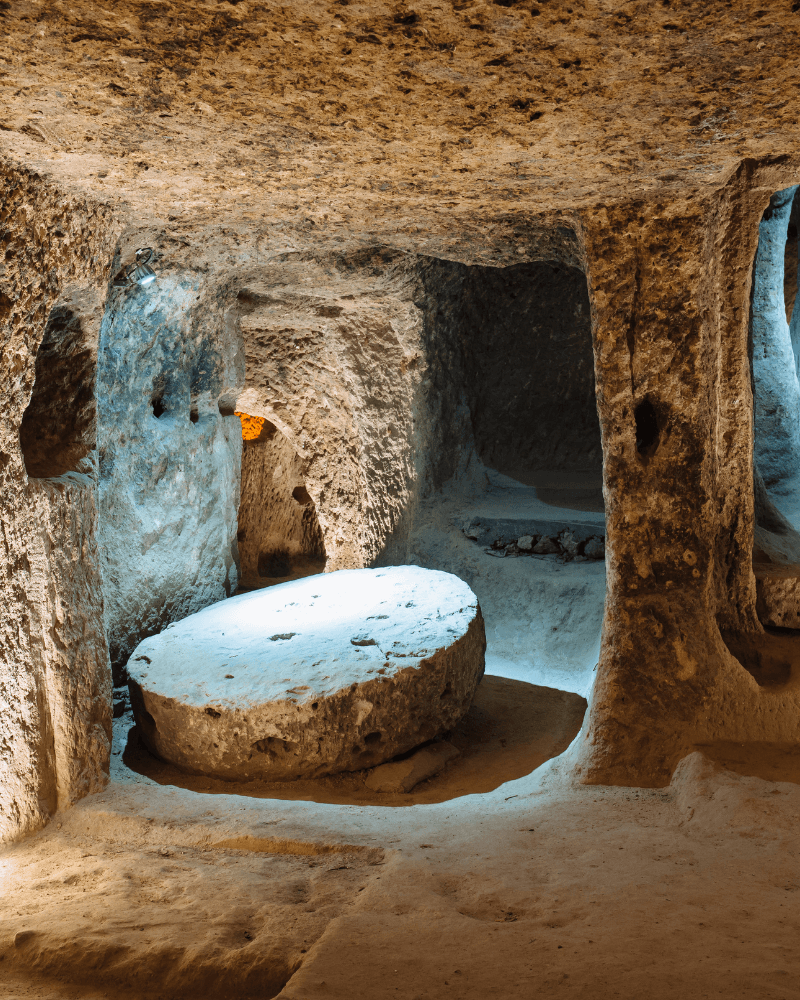
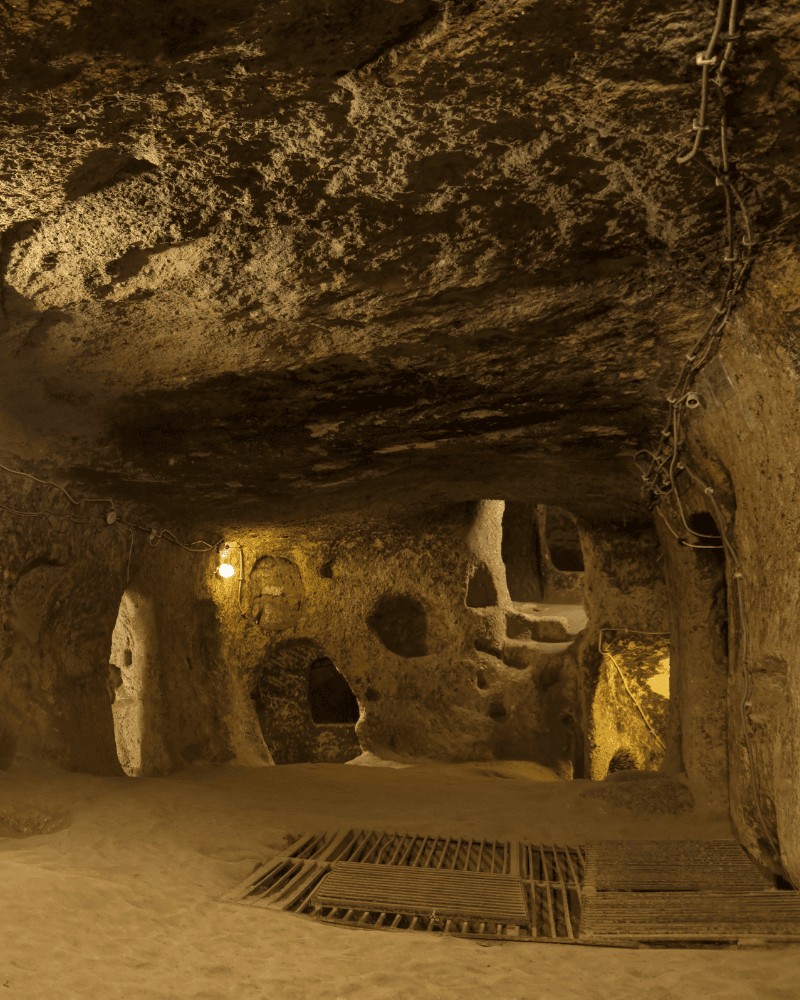
One of Cappadocia’s most remarkable subterranean settlements, Derinkuyu Underground City is an eight-level complex carved deep into the region’s soft volcanic tuff. Its underground spaces include food stores, wells, ventilation shafts, wine-production areas, meeting rooms, and places of worship, while some narrow passages could be sealed with massive circular stone doors for protection. Used especially as a refuge by early Christian communities, Derinkuyu also contains distinctive spaces such as a missionary school, a confessional area, and a baptismal pool. Today, only around ten percent of the underground city is open to visitors. Derinkuyu is also part of the UNESCO-listed Göreme National Park and the Rock Sites of Cappadocia World Heritage property.

  • Ticketed
  • Architecture
  • Religious Site
The Buckle(Tokalı) Church place to visit

Church

The Buckle(Tokalı) Church

One of the most significant rock-cut churches in Göreme Open-Air Museum, Tokalı Church dates from the late 10th to the early 11th century. The complex consists of four sections: the Old Church, New Church, a lower church, and a side chapel. It is particularly remarkable for its extensive fresco cycle, which presents numerous scenes from the life of Christ—including the Annunciation, Nativity, Baptism, Last Supper, Crucifixion, and Ascension—in a rich visual narrative. The extensive use of deep blue pigments is one of the church’s most distinctive features and sets its paintings apart from many other churches in Cappadocia. It is an exceptional place to experience Byzantine painting and Cappadocia’s rock-cut church tradition.

  • Ticketed
  • Architecture
  • Religious Site
Elmalı Church (Apple Church) place to visit

Church

Elmalı Church (Apple Church)

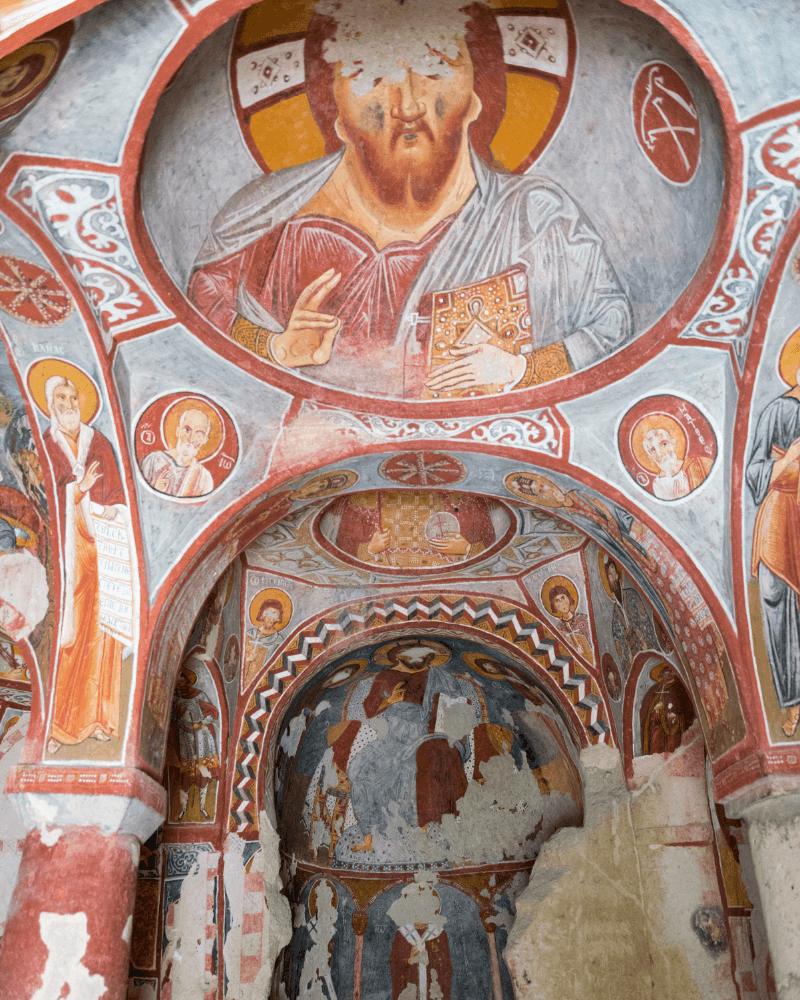
Located within Göreme Open-Air Museum, Apple Church is an important Byzantine rock-cut church dating from the mid-11th to the early 12th century. Designed on a closed-cross plan with nine domes, four columns, and three apses, its interior preserves both early red geometric decorations and later richly painted frescoes. The paintings depict biblical scenes including the Nativity, Baptism, Last Supper, Crucifixion, and Ascension of Christ, together with portraits of saints. With its distinctive architecture and well-preserved wall paintings, Apple Church is one of the highlights of Göreme for discovering Cappadocia’s Byzantine religious art.

  • Ticketed
  • Architecture
  • Religious Site
Three Beauties Viewpoint place to visit

Viewpoint

Three Beauties Viewpoint

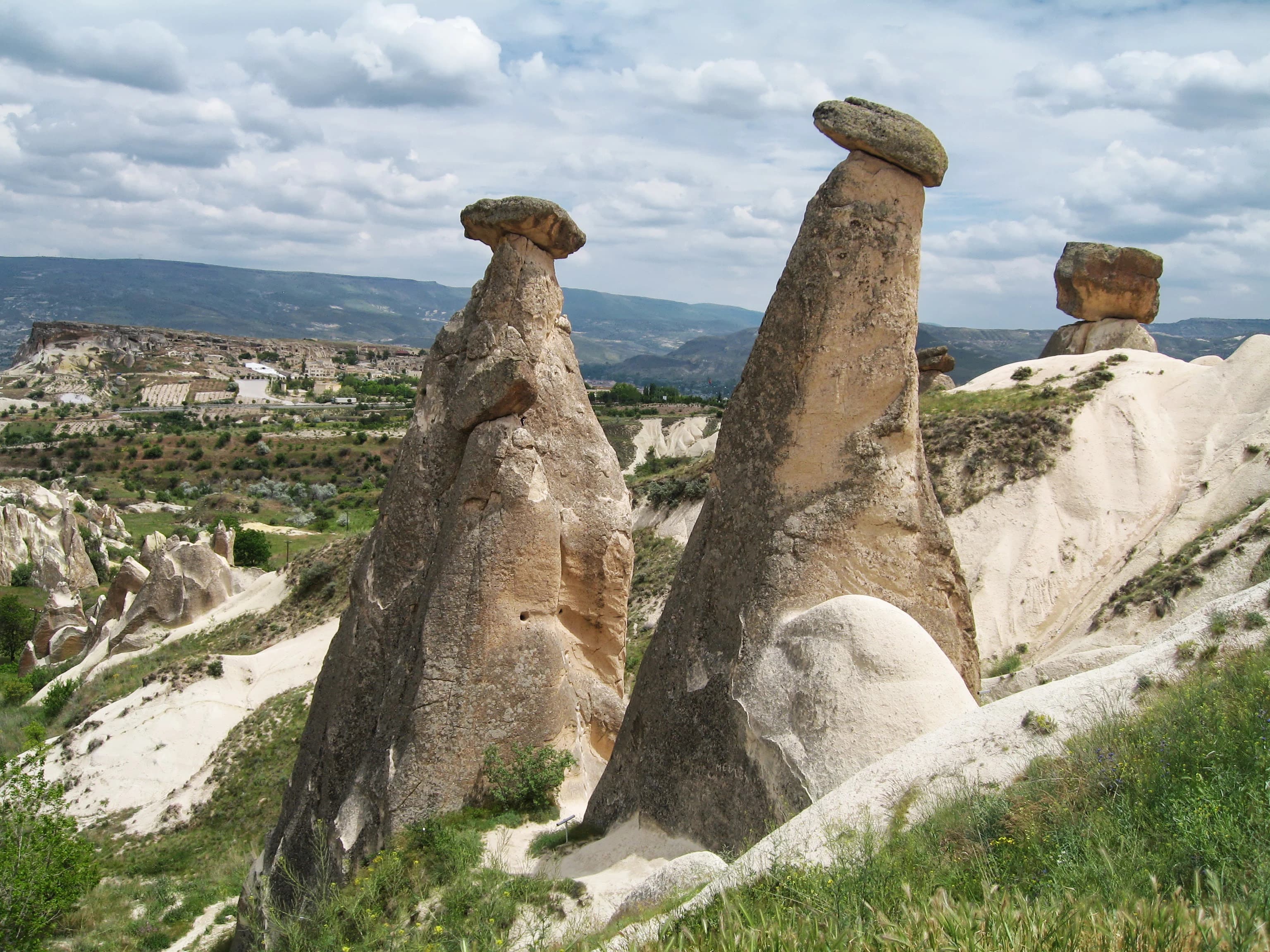
Located at the western entrance of Ürgüp, Three Beauties Viewpoint is one of Cappadocia’s best-known scenic stops, overlooking three iconic capped fairy chimneys and the surrounding volcanic landscape. The formations are known as the “Three Beauties” because of several local legends associated with them. From the wooden viewing area, visitors can admire the fairy chimneys and, on clear days, Mount Erciyes in the distance. The changing light at sunset gives the formations especially dramatic colours, making this one of Cappadocia’s most popular photography spots.

  • Photo Spot
  • Free
  • Outdoor
Çarıklı Kilise (the Church with Sandals) place to visit

Church

Çarıklı Kilise (the Church with Sandals)

Located within Göreme Open-Air Museum, Sandal Church is an important rock-cut church dating from the late 12th to the early 13th century. Its interior, designed with two columns, cross vaults, three apses, and four domes, is decorated with scenes from the life of Christ, portraits of saints, and compositions inspired by both the Bible and the Old Testament. The church is believed to take its name from footprints beneath the Ascension scene that resemble traditional sandals. Its well-preserved frescoes—including Christ Pantocrator, the Nativity, Baptism, Raising of Lazarus, Entry into Jerusalem, and Ascension—make it one of Cappadocia’s notable examples of Byzantine religious art.

  • Ticketed
  • Architecture
  • Religious Site
Göreme National Park and the Rock Sites of Cappadocia place to visit

National Park

Göreme National Park and the Rock Sites of Cappadocia

Combining Cappadocia’s extraordinary natural formations with living spaces carved into the rock over centuries, Göreme National Park and the Rock Sites of Cappadocia has been inscribed on the UNESCO World Heritage List since 1985 as a mixed cultural and natural property. Valleys, rock pillars, and fairy chimneys shaped by the erosion of volcanic tuff form a remarkable cultural landscape together with rock-cut churches, chapels, dwellings, and underground cities. The UNESCO property extends beyond the Göreme area to include the rock sites of Karain, Karlık, Yeşilöz, and Soğanlı, as well as the underground cities of Kaymaklı and Derinkuyu. From Byzantine rock churches and frescoes to hiking valleys and fairy chimneys, it is one of the best places to experience Cappadocia’s natural and historical character as a whole.

  • Architecture
  • Photo Spot
  • Christianity